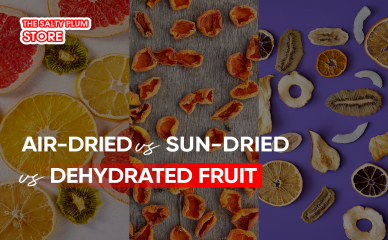




When you shop for dried fruit, you may come across terms such as air-dried, sun-dried and dehydrated. Although all three involve removing moisture from fruit, the way that moisture is removed can be quite different. The drying process can influence the fruit’s texture, flavour, colour, moisture level, nutritional composition and shelf life.
So, is air-dried fruit better than sun-dried fruit? Is dehydrated fruit healthier? And which one should you choose?
This guide explains how each process works, what it can mean for nutrition and quality, and what to look for when choosing dried fruit.
Air-Dried vs Sun-Dried vs Dehydrated Fruit at a Glance
The easiest way to understand the three terms is to compare their basic characteristics.
|
|
|
|
|
|
|
|
|
|
|
|
|
|
|
|
|
|
|
|
|
|
|
|
|
|
|
|
|
|
|
|
|
|
|
|
|
|
|
|
One important point is that these categories are not always completely separate. Air drying can be part of a dehydration process, and commercial products may use different combinations of heat, airflow and other processing steps.
The name on the package therefore tells you something about the product, but not necessarily everything about how it was made.
What Is Air-Dried Fruit?
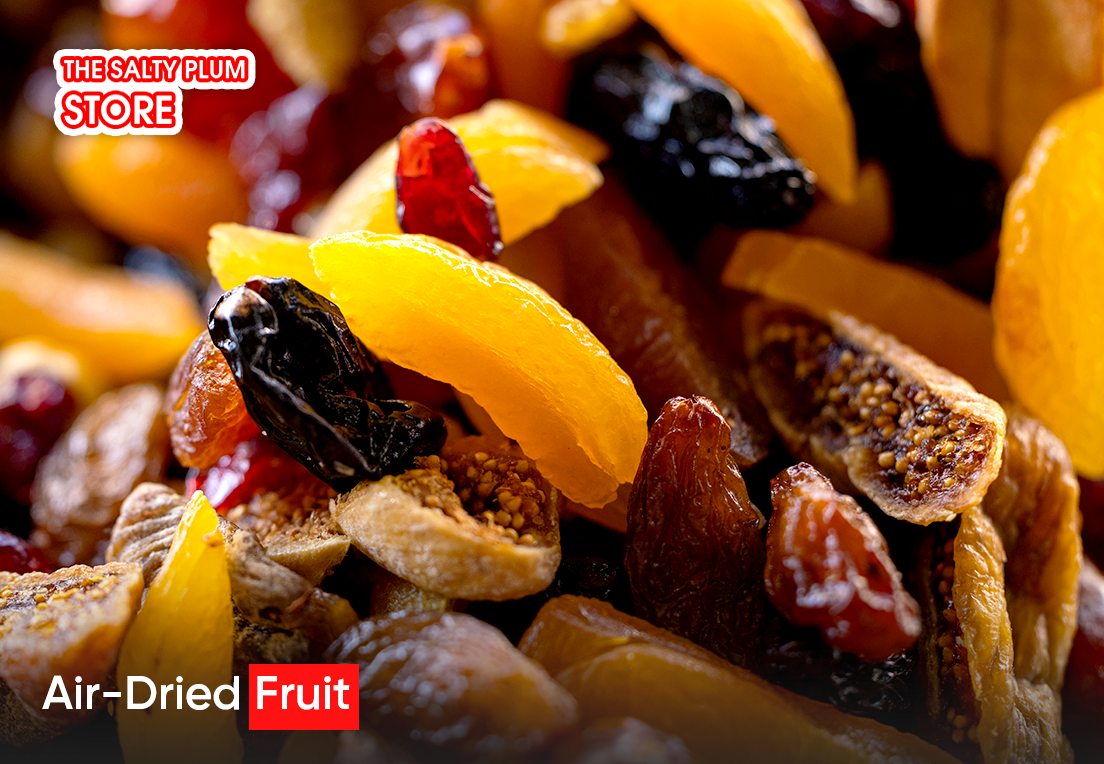
Air-dried fruit is fruit that has its moisture removed through exposure to air. Depending on the process, the air may be ambient air or warmed and circulated air.
At its simplest, the process can be understood as:
Warm or ambient air → moisture removal → dried fruit
As air moves around the fruit, moisture gradually evaporates from the fruit into the surrounding environment. The rate of drying depends on factors such as airflow, temperature, fruit size, moisture content and the specific drying conditions.
This is why it is important not to assume that every product labelled air-dried fruit was processed using exactly the same temperature or drying time.
What Is Sun-Dried Fruit?
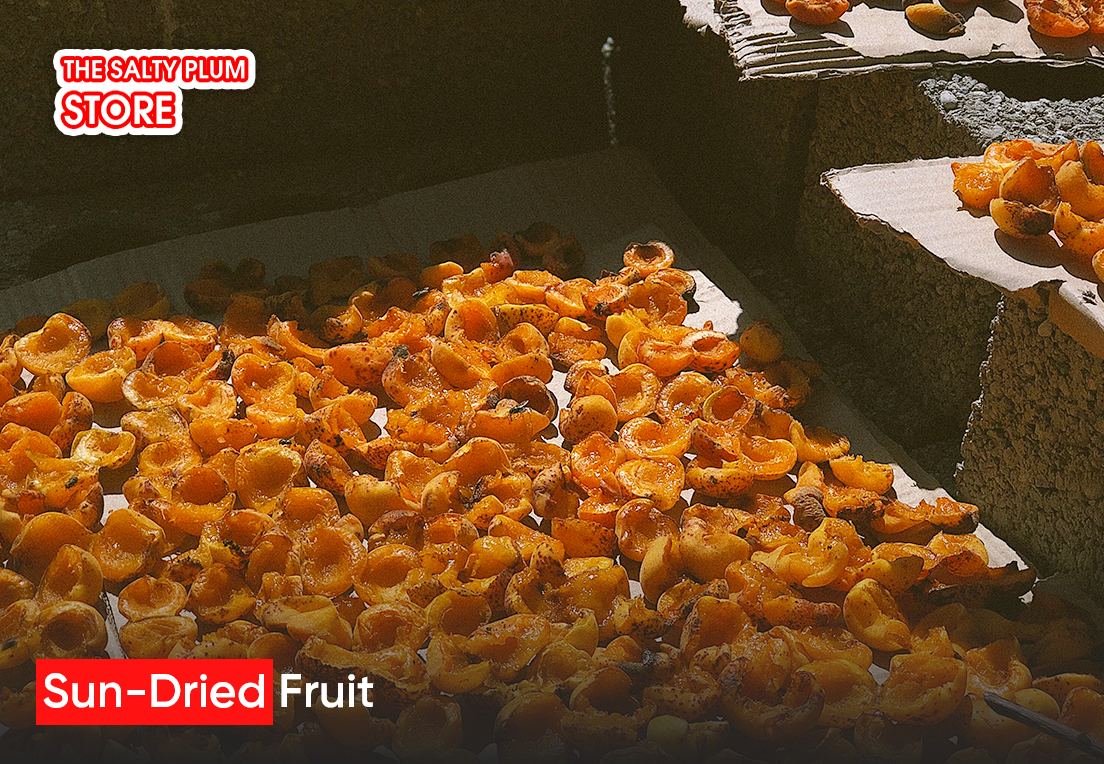
Sun-dried fruit is produced using sunlight and the surrounding air to remove moisture from fruit. It is one of the oldest approaches to preserving fruit and relies heavily on environmental conditions.
During sun drying, fruit is exposed to sunlight and warm air. Heat from the sun encourages moisture to evaporate, while surrounding airflow helps carry that moisture away.
The basic process is:
Sunlight + surrounding air → gradual moisture loss → dried fruit
The exact drying time can vary considerably depending on temperature, humidity, airflow, fruit size and moisture content.
Unlike a controlled commercial dryer, the environment can change during the process. This makes sun drying more dependent on local weather conditions.
What Is Dehydrated Fruit?
Dehydrated fruit is fruit that has undergone a process designed to remove enough moisture to improve its stability and extend its storage life.
Unlike “sun-dried,” which describes a specific traditional approach, dehydration is a broader processing concept.
A simplified commercial dehydration process may look like this:
Preparation → cutting → airflow + controlled heat → moisture removal → dried fruit
Fruit may first be washed, sorted, peeled or cut into pieces. It is then exposed to controlled drying conditions that encourage moisture to leave the fruit.
One of the most common approaches is convective hot-air drying, where heated air circulates around the product.
Commercial drying systems can regulate factors such as:
- Air temperature
- Airflow
- Drying time
- Humidity
- Product thickness
- Final moisture level
The exact process varies according to the fruit, equipment and desired final product. Research on dried fruit shows that drying conditions can influence colour, texture, flavour, nutrients and other quality characteristics.
How Does Drying Method Affect Nutrition?
Drying changes fruit because water is removed. However, that does not mean all nutrients disappear. The nutritional effect depends on the type of fruit and how it is processed.
Does Drying Destroy Nutrients?
Drying can cause some nutritional changes, particularly when fruit is exposed to heat, oxygen and prolonged processing.
Some compounds are more sensitive than others. For example, vitamin C and certain heat-sensitive compounds can be reduced during drying, while dietary fibre and minerals are generally more stable.
However, there is no simple rule that one drying method always preserves the most nutrients.
Research shows that nutrient and quality changes can vary according to:
- fruit variety;
- ripeness;
- drying temperature;
- drying time;
- airflow;
- oxygen exposure;
- pretreatment;
- final moisture level.
A review of dried-fruit processing found that drying can affect nutrients, colour, texture, flavour and other quality characteristics, with the extent of change depending on both the fruit and the specific drying conditions.
More recent research also highlights that different drying technologies involve trade-offs between quality, drying efficiency, energy use and production cost.
Does Drying Increase Sugar?
This is one of the most common points of confusion about dried fruit.
Drying does not create additional natural sugar in the fruit. Instead, the process removes water, leaving the naturally occurring sugars in a smaller amount of fruit.
For example, a fresh piece of mango contains a large amount of water. Once that water is removed, the resulting dried mango contains much less water but retains much of the fruit's original sugar.
This means the sugar becomes more concentrated by weight or volume.
There is also an important distinction between:
Water loss → concentrates the fruit's existing sugar
and
Added sugar → sugar is intentionally added during processing
These are not the same thing.
Two packages of dried mango can therefore have very different ingredient lists. One may contain only mango, while another may contain mango plus sugar, syrup or other ingredients.
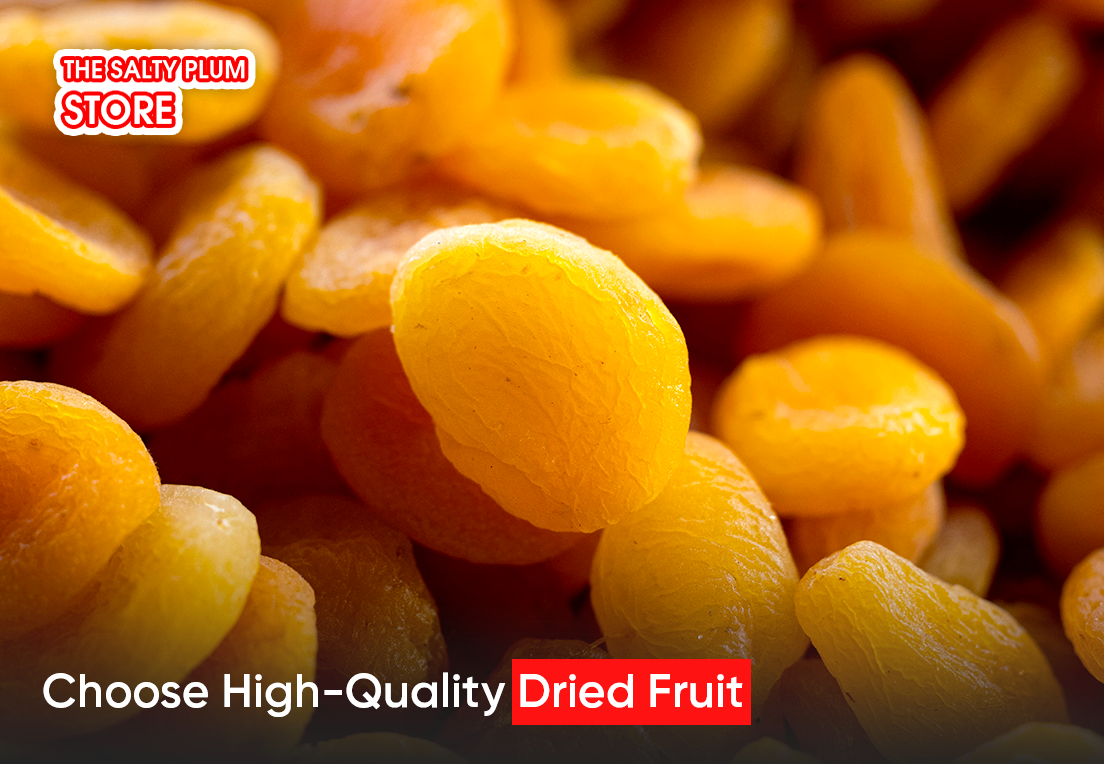
How to Choose High-Quality Dried Fruit
Choosing dried fruit does not have to be complicated. A few basic checks can help you make a more informed decision.
Check the Ingredient List
Start with the back of the package rather than the front. Look at exactly what is listed as an ingredient. If you want a product closer to the original fruit, look for a short and clearly explained ingredient list. Do not assume that words such as “natural” or “healthy” tell you how the product was processed.
Look for Added Sugar and Preservatives
Check whether the product contains:
- Sugar
- Glucose or fruit syrups
- Preservatives
- Sulfites
- Artificial colours
- Added flavourings
Added ingredients are not necessarily a sign of a poor-quality product. What matters is understanding what is in the food and deciding whether it matches your preferences.
For people who are sensitive to sulfites, checking the label is particularly important.
Buy From a Trusted Source
Finally, consider where the product comes from.
A reliable seller should provide clear information about:
- ingredients;
- product origin;
- packaging;
- storage;
- product specifications;
- quality and food-safety practices.
For more detailed guidance, see how to choose high-quality dried fruits, which covers ingredient lists, added sugar, preservatives, appearance, texture and packaging in greater detail.
What TSG Gordonvale Looks for in Quality Dried Fruit
For TSG Gordonvale, quality is not simply about whether a fruit is air-dried, sun-dried or dehydrated.
The company has built its range around dried and preserved fruit and states that it works with selected suppliers while focusing on product quality and food safety. TSG Gordonvale has served the Gordonvale community since 2017 and supplies both retail and wholesale customers.
Ingredient Transparency
One of the simplest ways to evaluate dried fruit is to understand what is actually in the package. That means looking beyond the product name and checking the ingredient list for:
- added sugar;
- preservatives;
- flavourings;
- colourings;
- other ingredients used during processing.
TSG Gordonvale's own guidance similarly encourages customers to read labels and consider ingredients, additives and preservatives when choosing dried fruit.
Processing and Product Quality
Drying method is important, but it should not be considered in isolation. The quality of dried fruit can also depend on the raw material, processing conditions, moisture level, texture, packaging and storage.
This is consistent with food-processing research showing that different drying conditions can influence physical, chemical, nutritional and sensory quality. For consumers, that means there is no need to automatically reject a product simply because it is dehydrated or assume another product is superior because it is sun-dried.
Food Safety and Proper Storage
Drying helps preserve fruit by removing moisture, but proper handling and storage remain important. Packaging can help protect dried fruit from moisture and environmental exposure after processing. TSG Gordonvale also highlights food safety and careful product selection as part of its approach to serving retail and wholesale customers.
For consumers, practical checks include looking for intact packaging, clear product information and appropriate storage instructions.
Consistency Matters
Consistency is another useful indicator when buying commercially produced dried fruit. Ideally, pieces from the same product should have reasonably consistent:
- texture;
- moisture;
- appearance;
- flavour.
Controlled commercial processing can make this easier to achieve because drying conditions can be monitored more closely than during outdoor sun drying.
Ultimately, the goal is not to find one drying method that wins every comparison. It is to understand what you are buying and evaluate the complete product rather than relying on one label.
There is no single drying method that is best for every type of fruit. Air-dried, sun-dried and dehydrated fruit can each offer different textures, flavours and processing characteristics. What matters most is understanding how the fruit was processed and checking the ingredients, added sugar, preservatives and storage information.
Looking for quality dried fruit in Australia? Explore TSG Gordonvale’s range of dried and preserved fruits and discover more options for snacking, cooking and everyday enjoyment