



Dried fruit is not inherently hard to digest for most healthy people, but its concentrated sugars, fiber, and certain FODMAPs can cause gas, bloating, or altered bowel habits in some people. This guide explains how the digestive system handles dried fruit, why some people experience discomfort, and how fiber, fructose, FODMAPs, and sorbitol can influence individual tolerance.
Is Dried Fruit Hard to Digest?
Dried fruit is generally digestible because the body processes its carbohydrates and other nutrients through the normal digestive system, although some components can reach the large intestine without being fully absorbed.
When you eat dried fruit, the small intestine absorbs many digestible carbohydrates and nutrients. Dietary fiber behaves differently because the human digestive system does not completely break down all types of fiber. Some fiber reaches the large intestine, where gut bacteria ferment certain components and produce gas as part of normal digestion. Bacteria in the large intestine break down carbohydrates that the stomach and small intestine do not fully digest, and this process can produce gas.
The drying process changes the volume of food you consume, not making the food inherently harder to digest. Removing water reduces the physical size of the fruit while retaining concentrated carbohydrates and nutrients in a smaller portion. The dehydration process can increase the concentration of FODMAPs, and the smaller size of dried fruit can make it easy to eat more than intended.
Fresh fruit provides substantially more water and volume for the same amount of fruit, while dried varieties provide a more concentrated form of the original food. This difference can affect satiety, portion size, and the amount of fermentable carbohydrate entering the digestive tract at one time.
Why Can Dried Fruit Cause Gas, Bloating or Stomach Discomfort?
Dried fruit can cause gas, bloating, or abdominal discomfort when poorly absorbed carbohydrates, fermentable fiber, or polyols increase water and gas within the digestive tract.
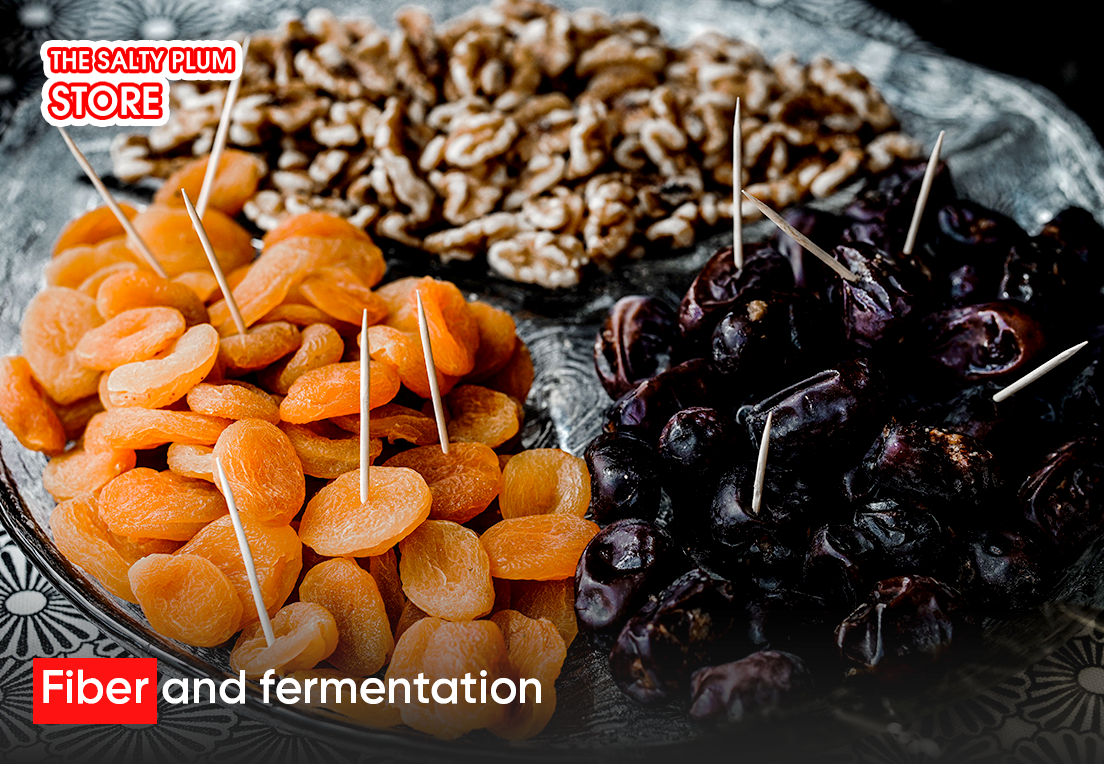
Fiber and fermentation
Fiber can contribute to gas production because gut bacteria ferment some of the fiber reaching the large intestine. Fermentation supports normal bowel function, but it also generates gas that can become noticeable when a person consumes a large amount of fiber at once. Some people may experience more bloating symptoms when consuming too much fiber.
The body does not need to digest fiber completely for it to play a useful role in digestion. Soluble and insoluble fiber have different physical effects, while adequate fiber intake can support stool formation and regular bowel movements. Fiber is an important component of digestive health because it can help soften and bulk up stool.
People who abruptly increase their fiber intake may experience increased abdominal distension or bloating because their digestive system and gut microbiome need time to adapt. Increasing fiber intake should be done gradually for individuals managing irritable bowel syndrome (IBS) symptoms, as adding too much at once can trigger bloating and abdominal distension.
Fructose and other FODMAPs
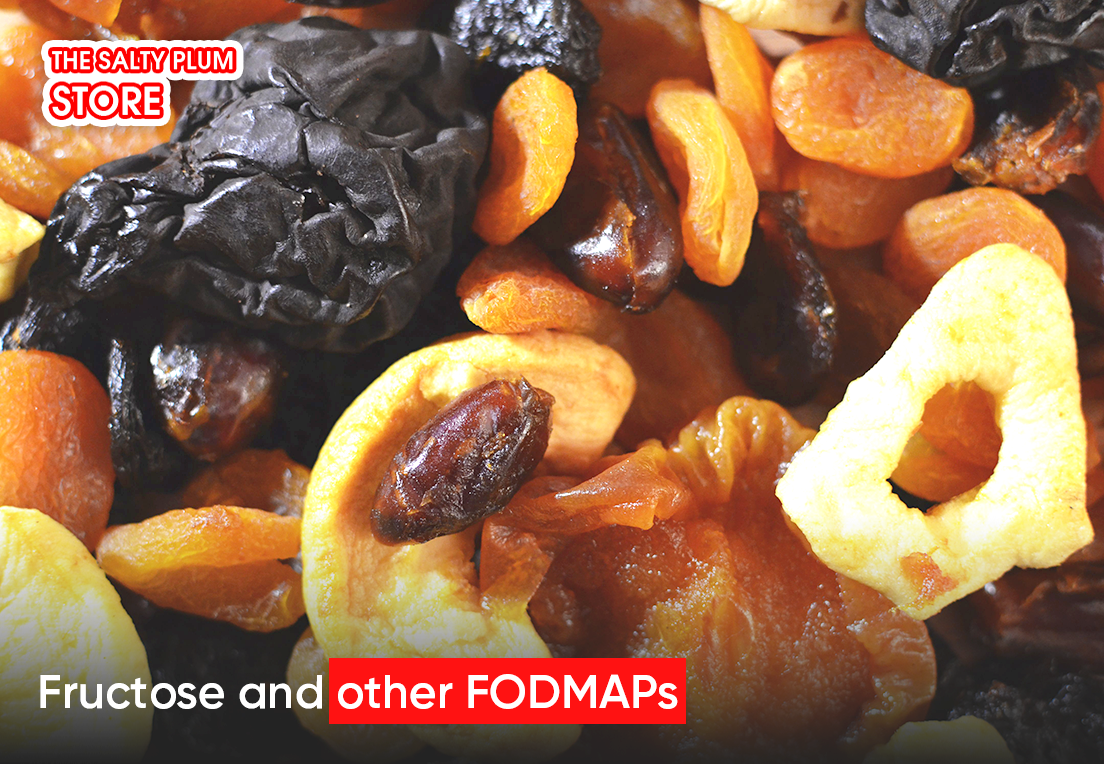
FODMAPs are short-chain carbohydrates that the small intestine does not fully absorb, allowing them to draw water into the gut and move to the large intestine for bacterial fermentation. FODMAPs can draw water into the small intestine and create gas when gut bacteria ferment them in the large intestine.
Fructose can act as a FODMAP when the digestive system does not absorb it efficiently. Excess fructose can therefore contribute to gastrointestinal symptoms in susceptible people, particularly when a food provides a substantial amount in one serving.
Intake quantity is very important because a food that causes no symptoms in a small portion may still cause discomfort in larger servings. Those following a low-FODMAP approach should pay attention to portion size rather than judging a food solely on whether it is classified as high or low in FODMAPs.
Sorbitol and polyols
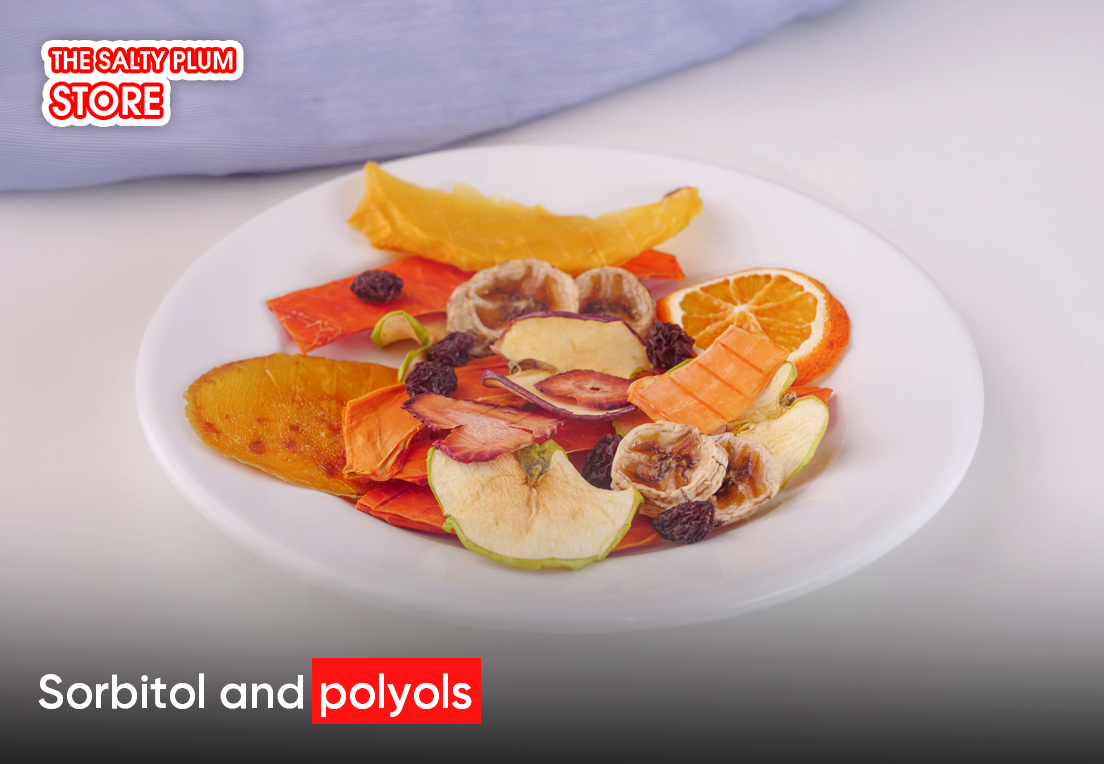
Sorbitol can contribute to digestive symptoms because the small intestine absorbs this polyol slowly and incompletely in many cases. Sorbitol and other polyols can exert an osmotic effect by drawing water into the bowel, while gut bacteria can ferment them to produce gas.
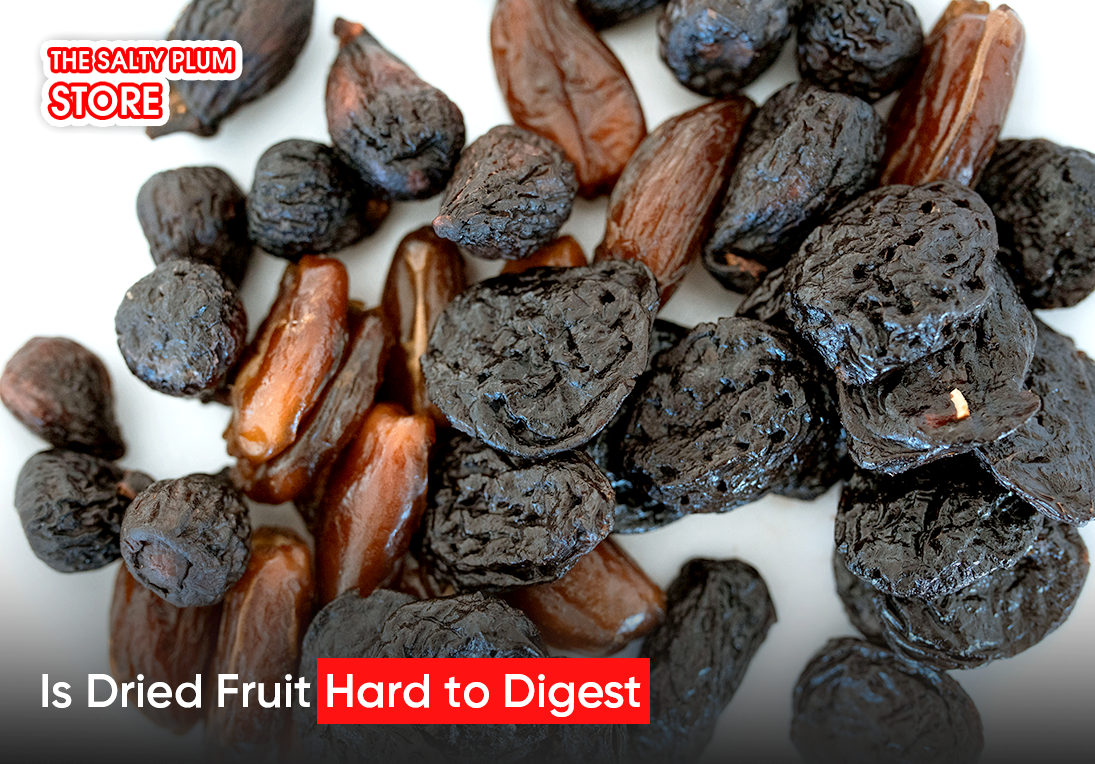
Prunes deserve particular attention because they naturally contain sorbitol as well as fiber. A larger serving can therefore produce a stronger bowel response in people who are sensitive to polyols or who are not accustomed to the amount consumed.
The same mechanism can explain why a person may experience loose stools, urgency, cramping, or bloating after eating a large serving. These reactions do not prove that a food is universally difficult to digest because individual tolerance varies considerably.
FAQ About Dried Fruit and Digestion
Is dried fruit harder to digest than fresh fruit?
Dried fruit is not necessarily harder to digest than fresh fruit because the digestive system processes both through the same gastrointestinal tract. The main difference comes from dehydration, which reduces water and concentrates carbohydrates into a smaller volume.
For instance, raisins provide a concentrated form of grapes, and the same principle applies to dried mangoes, prunes, dried figs, dried apples, dried pears, and dried cranberries. Dried fruit retains fiber and many nutrients while providing a more concentrated food source compared to its fresh counterpart.
A person who eats a large serving may therefore consume more carbohydrate or fiber than intended without realizing it. Portion size can become more important than the simple distinction between fresh and dried fruit.
Why does dried fruit make me bloated?
Dried fruit can cause bloating when fermentable carbohydrates reach the large intestine and interact with gut bacteria. This fermentation produces gas, while certain FODMAPs can also draw water into the digestive tract.
People with irritable bowel syndrome (IBS) may experience these effects more intensely because IBS can involve altered gut motility and heightened sensitivity to bowel distension. Extra gas and water can stretch the intestinal wall, triggering symptoms such as abdominal bloating, discomfort, constipation, or diarrhea in people with IBS.
A large serving can increase the amount of fermentable carbohydrate consumed at one time, so reducing the portion may help identify whether quantity contributes to the reaction.
Can dried fruit cause diarrhea?
Dried fruit can contribute to diarrhea in some people when a large serving supplies substantial amounts of poorly absorbed carbohydrates or polyols. Sorbitol can draw water into the bowel, while fermentation can increase gas and alter bowel sensations.
People with IBS may experience diarrhea as part of their individual response to FODMAP-containing foods. However, diarrhea after eating a particular food does not automatically establish that the food caused the symptom because gastrointestinal symptoms can have multiple triggers.
Recurring or severe diarrhea requires medical assessment rather than repeated dietary restriction. A doctor or dietitian can help determine whether IBS, food intolerance, infection, medication, or another digestive condition contributes to the symptoms.
Is dried fruit good for constipation?
Dried fruit can support bowel regularity because its fiber contributes to stool formation, while some varieties also contain compounds that affect intestinal movement. Fiber from dried fruit can support digestion and help maintain regular bowel movements.
Prunes are particularly relevant because their combination of fiber and naturally occurring sorbitol can promote bowel movements. However, the same properties can produce loose stools or abdominal discomfort when a person consumes more than they tolerate.
People with constipation related to IBS may benefit from dietary fiber, but increasing fiber intake should be done step-by-step because a sudden increase can generate gas and worsen bloating.
Can people with IBS eat dried fruit?
People with IBS can still eat certain types of dried fruit, though individual tolerance levels and portion sizes will determine whether a product triggers symptoms. Large amounts of dried fruit can be a consideration regarding FODMAPs, and different dietary approaches will yield different results for each person with IBS.
A low-FODMAP diet can help some people identify dietary triggers, but this approach should not become a permanent restriction without proper guidance. A low-FODMAP diet can be followed for a few weeks and then foods can be gradually reintroduced if symptoms improve.
People without IBS can also occasionally experience bloating or gas after consuming large amounts of fermentable carbohydrates. FODMAP fermentation occurs in individuals both with and without IBS, but those with IBS may notice it more clearly due to differences in sensitivity and gut motility.
Ultimately, dried fruit is not inherently difficult to digest. The digestive response depends on the fruit itself, its carbohydrate profile, the amount consumed, and the individual's tolerance. Paying attention to serving size and gradually adjusting fiber intake can help many people enjoy dried fruit without unnecessary digestive discomfort