



Dried fruit has gone bad when it develops visible mold, an abnormal odor, unexpected moisture, an unusual texture, insect activity, or clear signs of deterioration. However, natural changes such as darker color, wrinkles, softness, chewiness, or sugar crystallization do not automatically mean the fruit is spoiled.
This guide explains the main signs of spoilage, how to distinguish mold from harmless white crystals, which changes are normal, and how proper storage can help protect dried fruit from moisture and contamination.
How Can You Tell If Dried Fruit Has Gone Bad?
You can tell whether dried fruit has spoiled by checking its appearance, smell, moisture, texture, and packaging for unusual changes. The six main warning signs include visible mold, abnormal odors, unexpected moisture, unusual texture, insects or webbing, and significant deterioration.
Before assessing whether a product has deteriorated, it is useful to understand what dried fruit is and how removing moisture changes its texture, appearance and storage characteristics. Learn more about what is dried fruit and how the drying process affects the fruit.
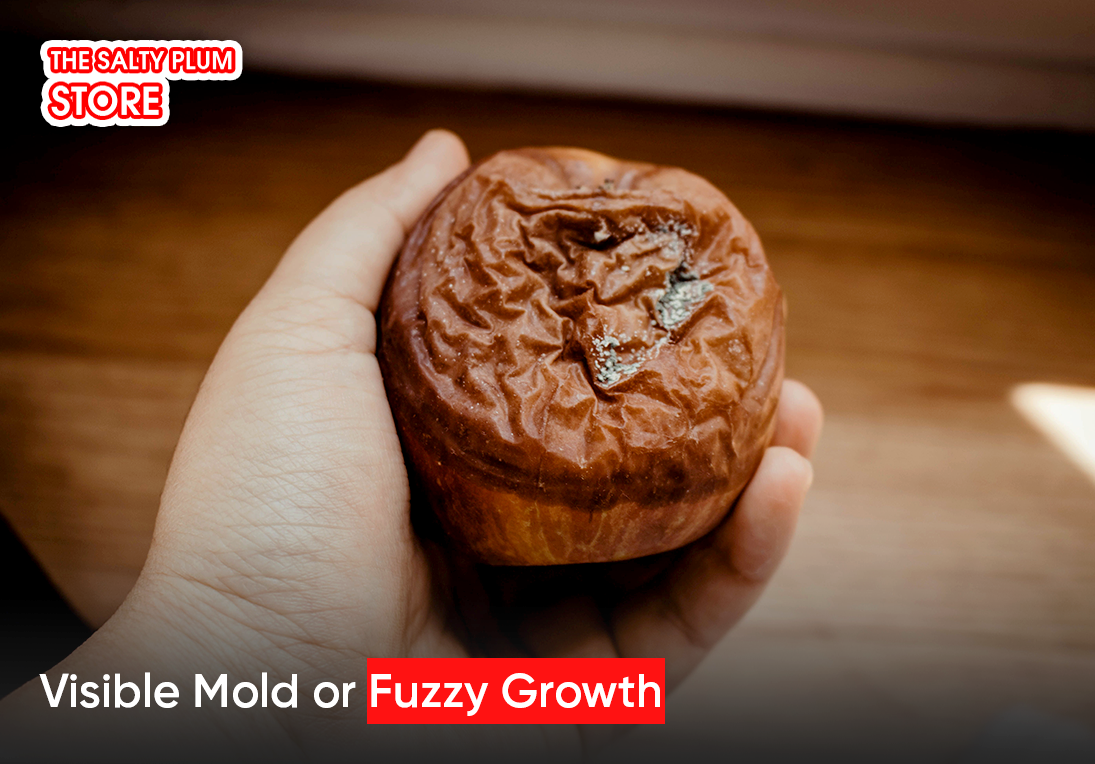
1. Visible Mold or Fuzzy Growth
Visible mold is one of the clearest signs that dried fruit should not be eaten because mold can grow beyond the area that you can see. Mold often appears as fuzzy, filamentous, powdery, or spreading growth, and its color can vary depending on the type of fungus.
Do not scrape, wash, or cut away visible mold and assume that the remaining dried fruit is safe because mold can penetrate food beyond the visible surface. USDA guidance recommends discarding moldy soft fruits and other susceptible foods rather than trying to salvage them.
2. Sour, Musty or Fermented Smell
An unusual sour, musty, fermented, or rancid smell can indicate that dried fruit has deteriorated. Dried fruit normally has a concentrated aroma because drying removes water and concentrates its natural flavor compounds, but an odor that suddenly smells fermented, stale, or unpleasant deserves attention.
A strong fruit aroma does not necessarily indicate spoilage because naturally intense fruits such as dried mango, tamarind, or prune can have distinctive smells. An odor becomes more concerning when it represents a clear change from the product's expected aroma or appears alongside moisture, mold, or other abnormalities.
3. Unexpected Moisture or Condensation
Unexpected moisture can increase the risk of spoilage because dried fruit can absorb water from humid air during storage. Condensation inside packaging, wet surfaces, liquid at the bottom of a container, or fruit that suddenly becomes wetter than expected can indicate that moisture has entered the package.
Moisture matters because dried foods can spoil even after they initially appear completely dry if they reabsorb water during storage. The National Center for Home Food Preservation recommends storing dried foods in clean, dry, airtight or moisture-resistant packaging and checking them regularly for moisture changes.
This issue deserves particular attention in warm or humid environments because repeated exposure to humid air can make moisture management more difficult. Queensland consumers can reduce this risk by sealing opened packages promptly and keeping dried fruit in a cool, dry location.
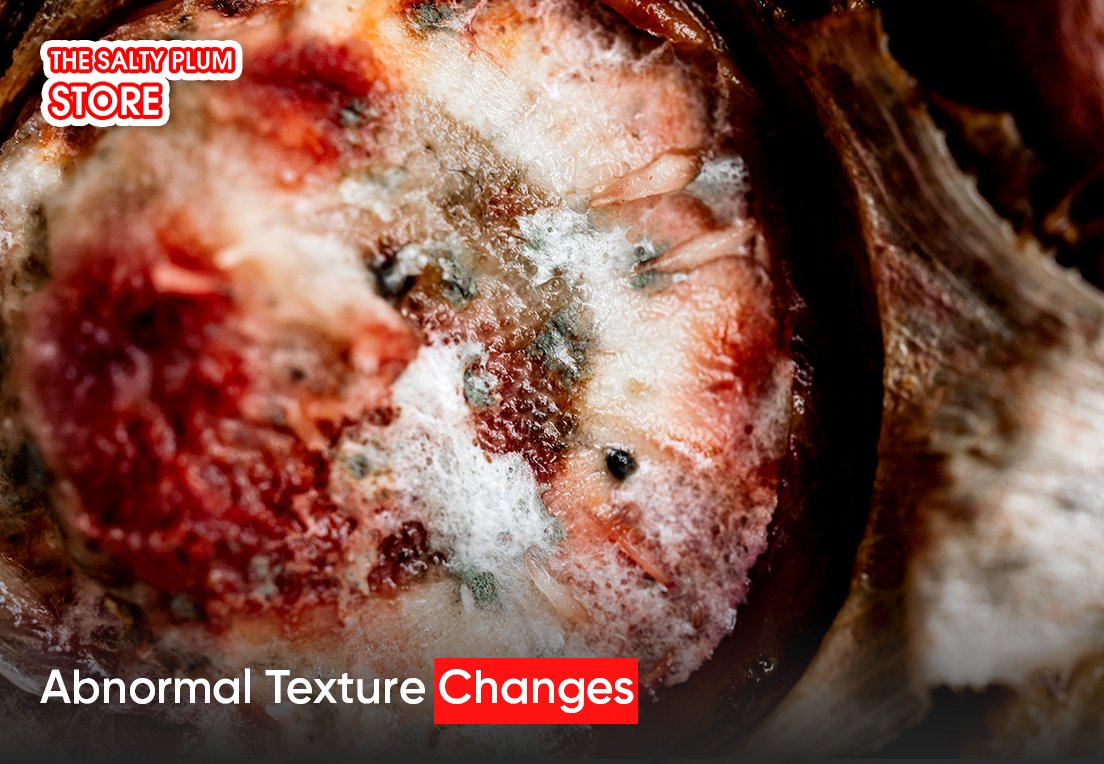
4. Abnormal Texture Changes
An unexpected texture change can indicate spoilage when dried fruit becomes slimy, unusually wet, mushy, or heavily clumped without those characteristics being normal for the product. Sudden changes matter more than the simple presence of softness or stickiness.
Soft, chewy, or sticky dried fruit does not automatically indicate spoilage because different fruits naturally have different textures. Dried mango can remain soft and chewy, while tamarind and other preserved fruits can have a naturally sticky texture, so consumers should compare the product with its expected characteristics rather than applying one texture rule to every dried fruit.
These differences are partly related to the characteristics of each fruit variety. Exploring the main types of dried fruit can help you understand why colour, texture and moisture levels vary between products.
5. Insects, Larvae or Webbing
Insects, larvae, webbing, tunnels, or insect debris indicate contamination or infestation and provide a strong reason to reject the affected product. FDA inspection procedures specifically recognize whole insects, webbing, excreta, feeding damage, tunnels, and insect-chewed areas as evidence of insect damage in dried fruit.
Consumers should also inspect the packaging because holes, damaged seals, or other signs of infestation can help explain how insects entered the product. Storage pests can affect dried fruit after processing, particularly when packaging does not adequately protect the food.
6. Significant Deterioration in Appearance or Flavor
Significant deterioration becomes concerning when dried fruit develops multiple unusual characteristics that differ from its normal appearance, aroma, texture, or flavor. Severe discoloration, internal decay, an abnormal smell, or other obvious deterioration can indicate that the product is no longer suitable for consumption.
Consumers should not taste questionable fruit to determine whether it has spoiled because tasting does not provide a reliable food-safety test. Instead, consumers should rely on visible evidence, odor, moisture, storage history, packaging condition, and other observable characteristics.
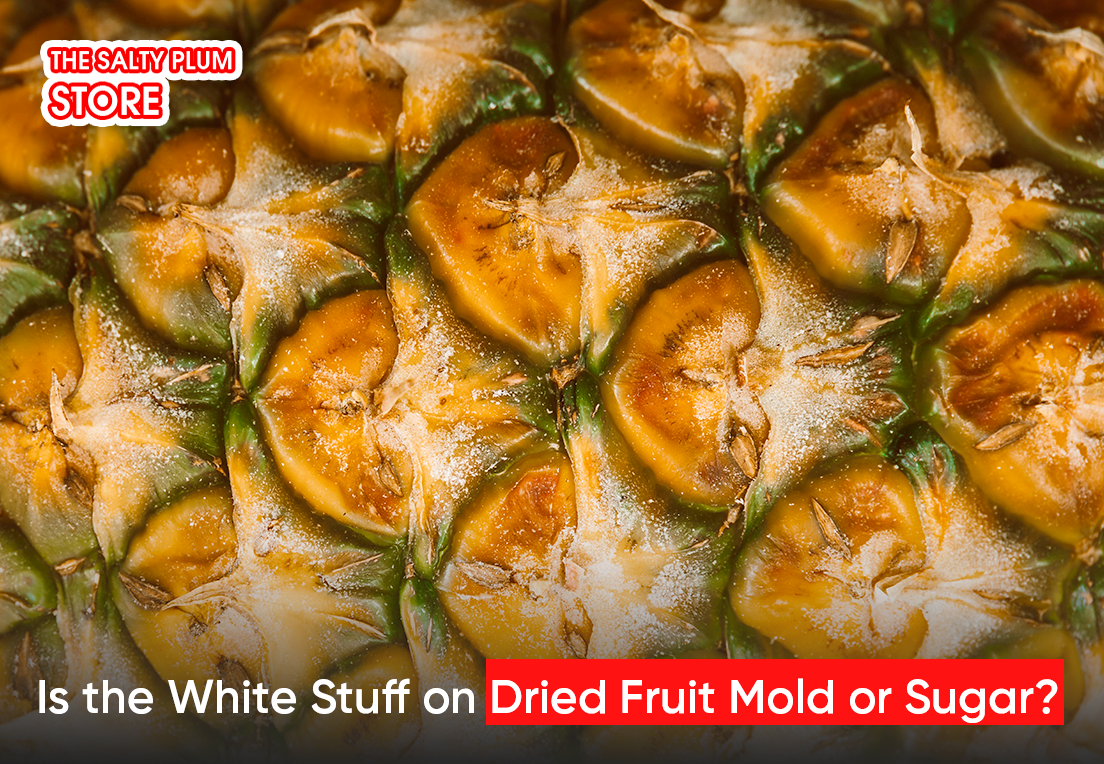
Is the White Stuff on Dried Fruit Mold or Sugar?
The white substance on dried fruit can represent natural sugar crystallization, but unexplained white growth can also indicate mold or another contamination issue.
When White Crystals May Be Normal
White crystals may occur when naturally occurring sugars move toward the surface and crystallize as the fruit changes during storage. Some dried fruits can develop visible surface deposits without showing other signs of spoilage.
Natural differences between fruit varieties can also affect how these deposits look. A dry, crystalline appearance without fuzzy growth, unusual odor, moisture, or other deterioration may be consistent with a normal product change.
When White Growth May Be Mold
White growth becomes more concerning when it looks fuzzy or filamentous, forms irregular spreading patches, or appears together with an abnormal odor or unexpected moisture. FDA documentation recognizes white filamentous fungal growth as a form of mold affecting certain dried fruits.
White material does not always provide enough information to identify the substance with certainty because dried fruit can also develop other unusual surface appearances. If you cannot confidently identify an unusual substance and it appears consistent with spoilage, the safer choice is to discard the product.
How to Store Dried Fruit to Prevent Spoilage
Proper storage reduces spoilage risk by limiting the moisture, heat, light, and contamination that can affect dried fruit over time. The National Center for Home Food Preservation recommends storing dried foods in cool, dry, dark conditions and using suitable moisture-resistant packaging.
Keep Dried Fruit Cool, Dry and Away From Light
A cool, dry, dark storage area helps preserve dried fruit because heat and moisture can shorten storage quality. NCHFP gives general storage guidance of about four months to one year for dried foods, with most dried fruits lasting about one year at 60°F and about six months at 80°F under appropriate storage conditions.
These figures should serve as general guidance rather than a universal expiration rule because product formulation, packaging, moisture content, processing, and storage conditions can vary.
Use Airtight, Moisture-Resistant Packaging
Airtight packaging protects dried fruit by reducing exposure to air and moisture after opening. NCHFP recommends clean, dry, insect-proof containers with tight-fitting lids or suitable moisture-resistant packaging, while vacuum packaging can provide another storage option.
Consumers should also divide large quantities into practical portions when possible because repeatedly opening one container exposes the remaining fruit to air and moisture.
Check Stored Fruit Regularly
Regular inspection helps identify moisture, mold, insects, and other changes before the problem spreads through a container. Consumers should check the fruit and packaging periodically, particularly after storing opened products for an extended period.
The same principle applies to bulk purchases: keeping unused portions sealed and monitoring storage conditions can help maintain quality for longer.
What Should You Check Before Buying Dried Fruit?
You can reduce the risk of bringing home poor-quality dried fruit by checking the product condition, packaging, labeling, and storage instructions before purchase.
A simple pre-purchase check includes:
- Inspect the packaging: Look for damaged seals, holes, tears, or signs of moisture.
- Check the product appearance: Look for unexpected mold, insects, webbing, or severe deterioration.
- Read the storage instructions: Follow the manufacturer's recommendations after opening.
- Check the date information: Treat the printed date as one factor rather than relying on it alone.
- Consider the product type: Naturally soft or sticky fruit should not automatically be classified as spoiled.
- Store it correctly after purchase: Move opened products into suitable airtight storage when appropriate.
Understanding the difference between dried fruit expiration and actual spoilage can also help consumers make better decisions because a printed date does not describe every aspect of a product's storage history or current condition.
The differences between dried and fresh fruit can also affect expected texture, moisture content and shelf life. See dried fruit vs fresh fruit for a closer comparison of how the two forms differ.
Knowing how to tell if dried fruit has gone bad helps you make safer choices while reducing unnecessary food waste. Mold, unusual odors, unexpected moisture, abnormal texture, insects, and significant deterioration are the key warning signs to watch for, while natural changes such as softness, chewiness, wrinkles, darker color, or sugar crystallization do not automatically mean the fruit has spoiled.
If you are looking for dried and preserved fruit in Queensland, TSG Gordonvale offers a range of Asian and tropical favourites, including dried mango, dried tamarind, dried ginger, dried pawpaw, dried prune, and dried olive. Explore TSG Gordonvale's dried fruit and preserved fruit range to find products suited to your pantry and everyday snacking needs.