



Dried fruit generally has more sugar per 100 g than fresh fruit because drying removes water while leaving most of the fruit’s natural sugar behind. Drying itself does not create sugar, so unsweetened dried fruit still contains the fruit’s original sugars in a more concentrated form.
This difference can make dried fruit appear much higher in sugar when you compare equal weights. However, 100 g of dried fruit does not represent the same amount of original fruit as 100 g of fresh fruit. Understanding this distinction can help you read nutrition labels more accurately, identify added sugar and choose dried fruit based on your preferences rather than assuming that all dried fruit is high in added sugar.
Why Does Dried Fruit Have More Sugar Than Fresh Fruit?
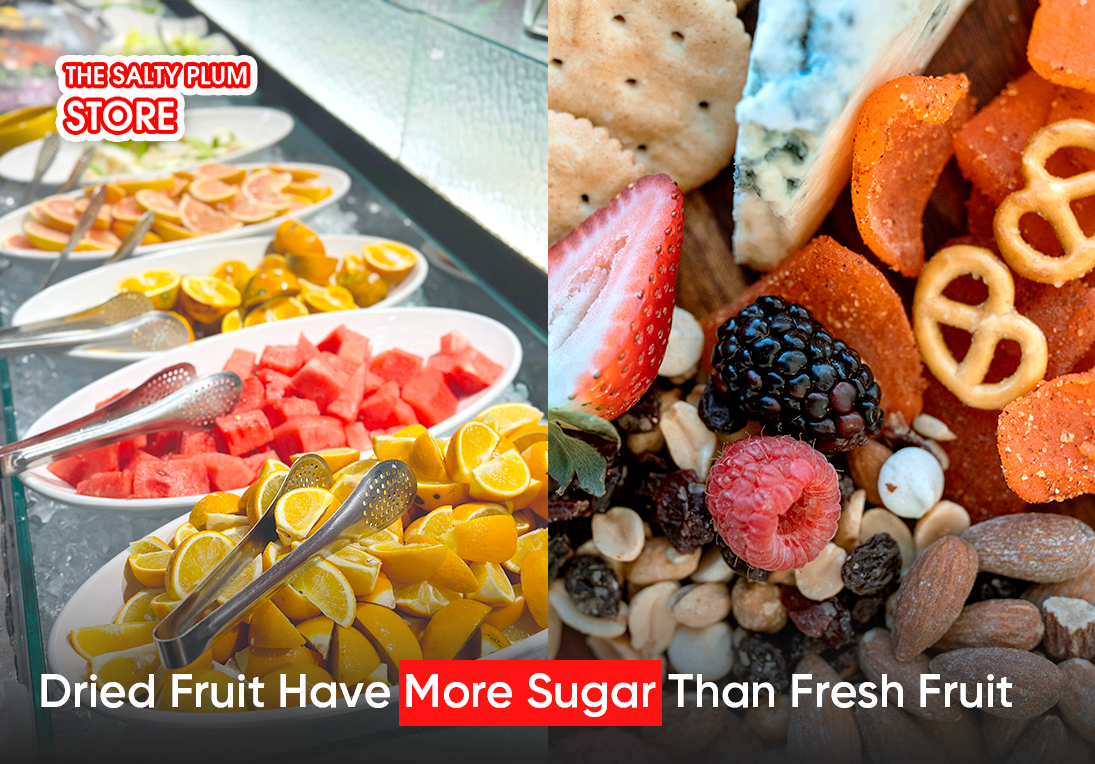
Drying removes water from fruit, while the fruit retains much of its natural sugar, so the remaining product becomes smaller and more concentrated. Fresh fruit contains a large amount of water, but dried fruit contains far less water after dehydration.
For example, an apple does not suddenly produce more sugar when it becomes dried apple. Instead, the drying process removes water and leaves the naturally occurring sugars in a smaller amount of fruit.
This process explains why dried fruit tastes sweeter and why nutrition labels often show a higher sugar value per 100 g. Harvard Health gives a simple example: 100 g of fresh apple contains about 10 g of sugar, while 100 g of dried apple contains about 57 g.
A 100 g serving of fresh fruit and a 100 g serving of dried fruit do not represent the same amount of original fruit because drying removes much of the fruit’s water.
Consider the comparison this way:
100 g fresh fruit → high water content → less concentrated sugar
100 g dried fruit → much less water → more concentrated sugar
Is the Sugar in Dried Fruit Natural or Added?
The sugar in dried fruit can be either naturally occurring, added during processing, or a combination of both, depending on the product.
Natural Sugar in Unsweetened Dried Fruit
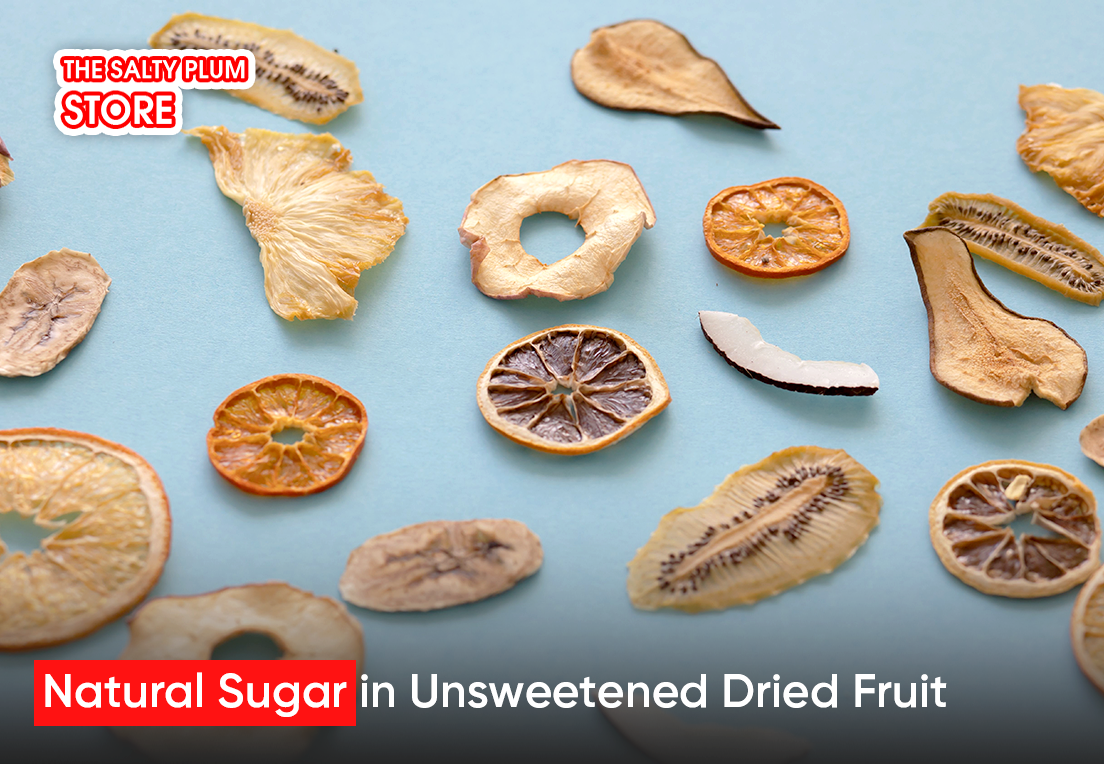
Unsweetened dried fruit retains the natural sugars that were already present in the original fruit. Food Standards Australia New Zealand (FSANZ) explains that sugars occur naturally in many foods, including fruit, while manufacturers can also add sugars as ingredients.
A product made from fruit alone therefore does not need added sugar to contain a relatively high amount of sugar. The fruit’s natural sugars remain after water is removed, which increases their concentration by weight.
This distinction helps explain why an ingredient list can show only fruit while the Nutrition Information Panel still reports a substantial amount of sugar.
When Sugar Is Added to Dried Fruit
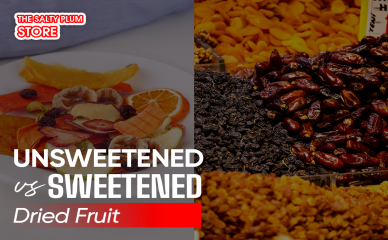
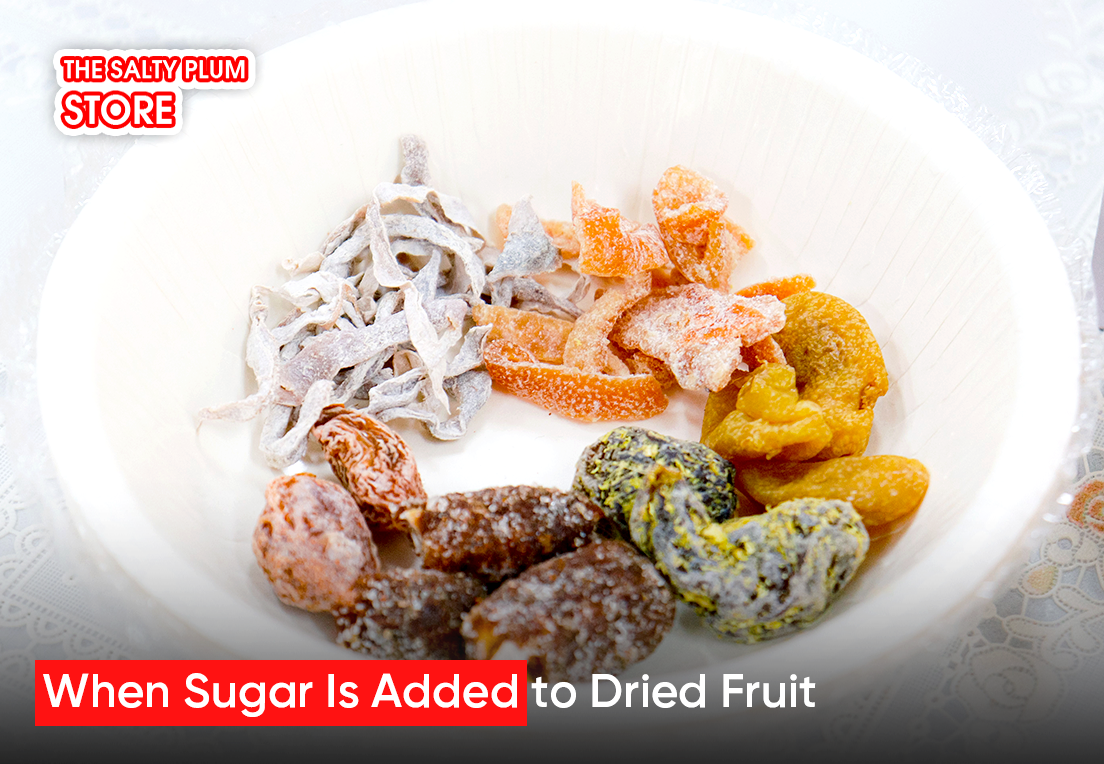
Some dried fruit products contain added sugar or syrup to change sweetness, texture or flavour, so consumers should check the product rather than assume every dried fruit is unsweetened.
Examples can include:
- Some sweetened cranberries
- Some mango products
- Some pineapple products
- Candied fruit
- Dried fruit prepared with sugar or syrup
The presence of added sugar does not mean every product in that category contains added sugar. Product formulations vary, so the ingredient list provides a more reliable answer than the fruit name alone.
Sugar is only one part of the nutritional profile of dried fruit. To compare carbohydrates, fibre, calories, vitamins and minerals alongside sugar content, see this guide to dried fruit nutrition.
How to Check the Ingredient List
The ingredient list can show whether a dried fruit product contains added sugar because manufacturers must identify the ingredients used in the food.
A simple check includes:
- Fruit-only ingredient list: indicates that no added sugar ingredient is listed.
- Sugar: indicates that sugar has been added as an ingredient.
- Syrup or glucose syrup: indicates an added sweetening ingredient.
- Sucrose or another added sugar: indicates that the product contains an added sugar ingredient.
FSANZ also notes that Australian food labels provide an ingredient list that can help consumers understand what is contained in packaged food.
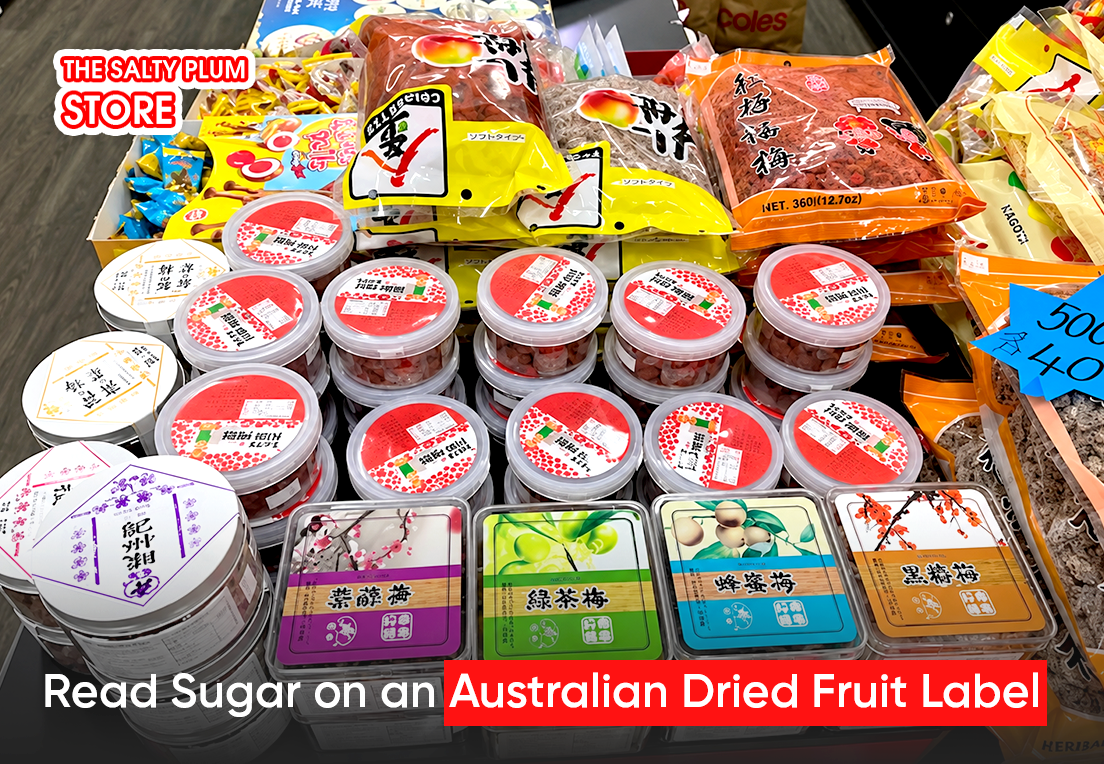
How to Read Sugar on an Australian Dried Fruit Label
Australian nutrition labels provide useful information, but consumers need to understand what the word “sugars” actually represents.
|
|
|
|
|
|
|
|
|
|
|
|
|
|
|
|
|
|
Total Sugars Are Not the Same as Added Sugars
The “Sugars” figure on an Australian Nutrition Information Panel represents total sugars, which includes naturally occurring sugars and sugars added as ingredients.
FSANZ specifically states that sugars in the Nutrition Information Panel include naturally occurring sugars, such as those found in fruit and milk, as well as sugars added to the food.
This means a dried fruit product can show a high “sugars” value even when its ingredient list contains only fruit.
Water removal can concentrate sugars, but drying can also affect certain nutrients in different ways depending on the processing conditions. Learn more about does dried fruit lose nutrients and which nutrients are more sensitive during drying.
Australia also does not simply provide a separate “added sugars” number in the standard NIP. FSANZ closed its proposal to require added sugars to be separately listed in the NIP in March 2026 after determining that the proposed change was unlikely to provide a clear public health benefit relative to its costs.
For shoppers, the practical approach is therefore to use both parts of the label:
- Check the Sugars figure in the Nutrition Information Panel.
- Check the ingredient list for sugar, syrup or other added sweeteners.
- Compare products using the per 100 g values.
- Consider the serving size before deciding how much you will actually eat.
Check Per 100 g and Per Serving
The per-100 g value helps you compare different dried fruit products, while the per-serving value helps you understand the amount you actually consume.
Australian Nutrition Information Panels generally provide nutrition information per serving and per 100 g for packaged foods, including energy, protein, fat, carbohydrate, sugars and sodium.
For example, suppose one dried fruit product contains more sugar per 100 g than another product. That difference may matter when comparing the products, but your actual intake depends on how much of either product you eat.
What “No Added Sugar” Actually Means
“No added sugar” does not mean “sugar-free” because fruit naturally contains sugars.
FSANZ states that products carrying a “no added sugar” claim may still contain high levels of naturally occurring sugars.
This distinction is especially important for dried fruit because the natural sugars become concentrated when water is removed. A dried mango product, for example, can contain a noticeable amount of total sugar while still having no added sugar if its ingredients contain only mango.
Therefore, “no added sugar” describes how the product was formulated, not the total amount of sugar naturally present in the fruit.
Sugar content is one factor to consider when comparing dried fruit, but fibre, minerals, ingredients and the overall nutritional profile also matter. Explore healthy dried fruits to compare varieties and their nutritional characteristics.
If you want to understand the difference between label claims, ingredients and overall product quality, you can also refer to TSG Gordonvale’s guide on how to choose high-quality dried fruits.
Dried fruit generally contains more sugar per 100 g than fresh fruit because removing water concentrates the fruit’s natural sugars. However, this does not mean that drying automatically adds sugar. The more important difference comes from the product itself, its serving size and whether manufacturers add sugar or syrup during processing