



Walk into any supermarket and you'll see dozens of dried fruit options. But before a fruit ever reaches a drying machine, its destiny is already decide in the orchard. The quality of dried fruit is almost entirely determined by the raw ingredient, and that's where most budget brands cut corners first.
Ingredient Quality: It All Starts in the Orchard
Walk into any supermarket and you'll see dozens of dried fruit options. But before a fruit ever reaches a drying machine, its destiny is already decided, in the orchard. The quality of dried fruit is almost entirely determined by the raw ingredient, and that's where most budget brands cut corners first.
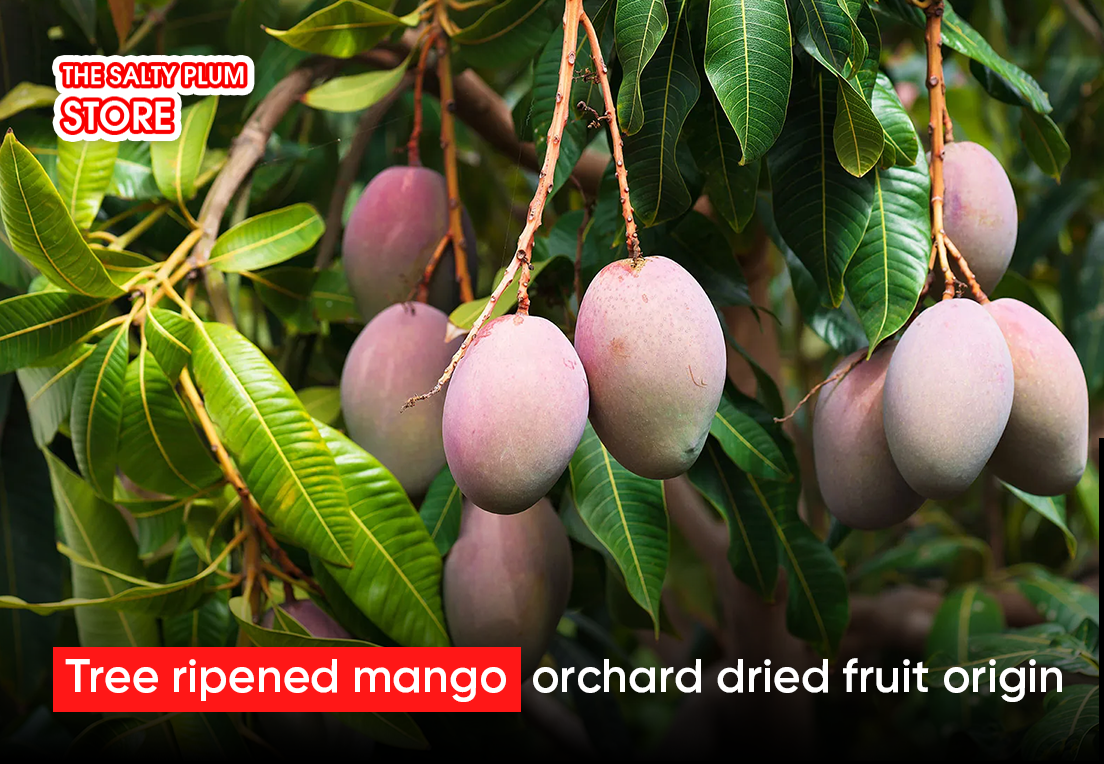 Tree ripened mango orchard dried fruit origin
The Ripeness Factor: Tree-Ripened vs Force-Ripened
Here's a fact most brands won't tell you: the majority of mass-market dried fruit is made from fruit harvested green, then chemically ripened during transport. By the time it's dried, the fruit has never developed its full sugar profile or aromatic compounds.
Tree-ripened fruit harvested at peak natural ripeness undergoes a completely different cellular process. The starches fully convert to natural fructose. The volatile aromatic compounds, the ones responsible for that deep, complex fragrance, reach their highest concentration. When you dry that fruit, you lock in genuine flavour.
How to spot it on the label:
-
Look for phrases like "tree-ripened," "naturally ripened," or specific harvest region details
-
Vague terms like "made from real fruit" are a red flag all dried fruit is made from real fruit
-
Premium products from TSG Gordonvale's Dried Mango and Dried Pawpaw lines source from tropical-climate orchards where fruit is harvested at its natural peak
Origin Matters: Why Geography Is Everything
A mango from tropical Far North Queensland doesn't taste the same as one grown in a temperature controlled greenhouse in another climate. The soil mineral content, rainfall pattern, and UV exposure during growing directly influence the fruit's sugar composition, acidity, and skin-to-flesh ratio.
This is why serious dried fruit producers specify their origin on the label and why TSG Gordonvale curates products from verified origins across Australia, Taiwan, Thailand, and beyond. Gordonvale itself sits in the Wet Tropics of North Queensland, one of Australia's most fertile growing regions for tropical fruit. That's not a coincidence, it's a sourcing philosophy.
Origins that signal quality in dried fruit:
-
Dried Mango → Far North Queensland (AUS), Thailand highlands
-
Dried Tamarind → Thailand, Vietnam (hand-harvested varieties)
-
Dried Ginger → Australia, Japan
-
Salty Plum → Taiwan, Hong Kong (traditional craft producers)
The Processing Art: Science vs Speed
Even the finest mango can be ruined in 20 minutes of bad processing. The drying method is arguably the most important variable in the quality of dried fruit, yet it's almost never printed clearly on packaging.
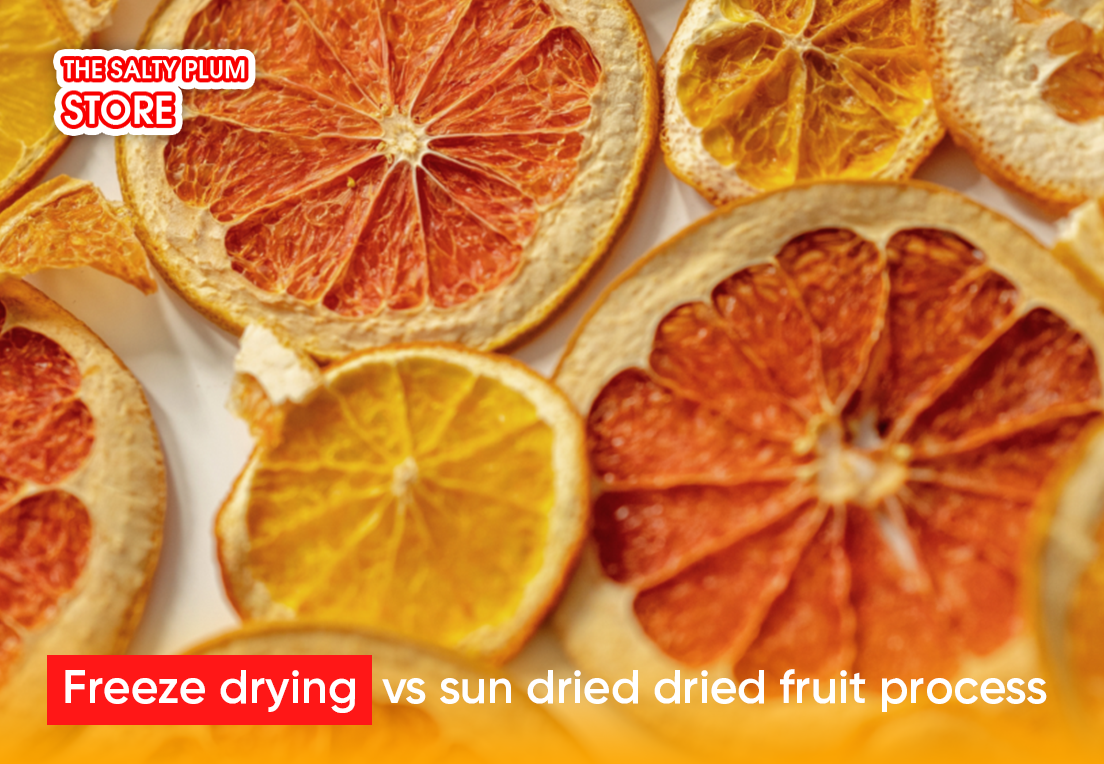 Freeze drying vs sun dried dried fruit process
Traditional Drying vs Modern Technology
There are three main methods used in dried fruit production today, and each creates a distinctly different eating experience:
Sun-Drying (Traditional) The oldest method. Fruit is laid out in direct sunlight for days or weeks. At its best, think Turkish figs or Medjool dates, sun-drying produces an incomparably rich, caramelised depth of flavour. At its worst, it introduces contamination risk, inconsistent moisture levels, and oxidation damage. Best suited for robust fruits with thick skins.
Freeze-Drying (Lyophilisation): The 2026 Gold Standard The most sophisticated method in the industry. Fruit is frozen rapidly, then placed in a vacuum chamber where ice converts directly to vapour bypassing the liquid stage entirely. This process preserves up to 97% of the original nutritional content, maintains the fruit's natural cell structure (meaning it holds its shape and colour without additives), and produces a uniquely light, crisp texture.
The trade-off? Freeze-drying equipment costs millions of dollars. A single batch takes 24–48 hours. That cost gets reflected honestly in the retail price which is exactly why genuinely freeze-dried fruit is never the cheapest option on the shelf.
Low-Temperature Dehydration The most common commercial method. Fruit is dried at 55–70°C over 8–16 hours. Done well, this retains pleasant chewiness and reasonable nutritional content. Done fast (at higher heat to cut processing time), it creates the leathery, overly sweet texture common in budget dried fruit. The difference between a $4 bag and a $14 bag of dehydrated mango often comes down entirely to temperature control and drying duration.
The Sulphur Debate: Why Bright Colours Can Be a Warning Sign
Open a bag of bright orange dried apricots and compare them to a naturally dried version. The natural one will be dark brown almost mahogany. Which one is healthier?
The mahogany one.
Sulphur dioxide (E220) is used extensively in budget dried fruit production to maintain an artificially vivid colour that consumers associate with freshness. It has nothing to do with flavour or nutrition, it's purely visual. Premium producers skip sulphur preservatives and let the fruit's natural Maillard reaction create that darker, richer, more honest appearance.
Practical guide: What to look for on the label
|
Ingredient List Contains |
What It Means |
|
"Sulphur dioxide" or "E220" |
Colour preserved artificially |
|
"Sulphites" |
Same as above |
|
No preservatives listed |
Naturally processed — check texture and colour |
|
"Added sugar" in top 3 ingredients |
Likely sugar-coated or syrup-soaked (see next section) |
Price vs Value: Why "Cheap" Can Be Expensive
This is the section the cheap brands definitely don't want you to read.
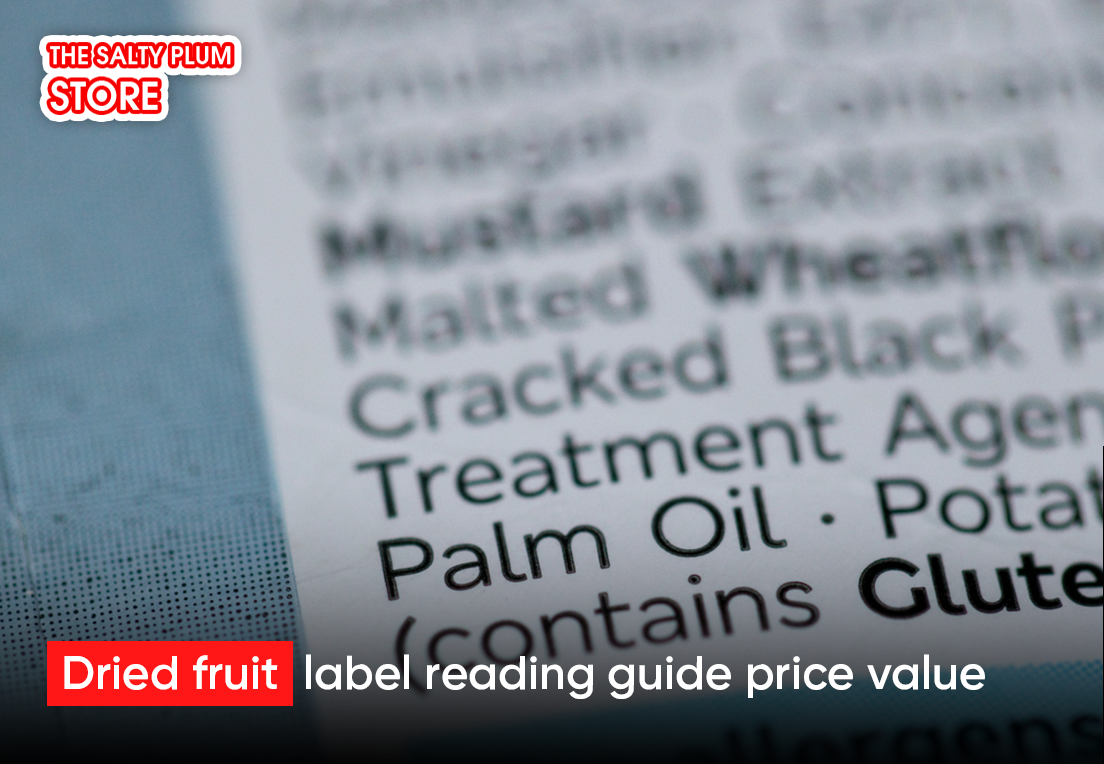 Dried fruit label reading guide price value
The Sugar-Weight Trick
Here's how it works: a manufacturer starts with low-grade fruit underripe, blemished, or damaged during harvest. By itself, it would taste sour, flat, or bitter. So it's soaked in a heavy sugar syrup before drying.
The results are:
-
The product weighs more (sugar syrup adds mass you're literally buying water and sugar at "dried fruit" prices)
-
The flavour profile is masked: any sourness or off-note disappears under a glucose coating
-
The nutritional profile is distorted: what appears to be a healthy snack is delivering 30–40% added sugar per serve
This is especially common in budget dried cranberries, pineapple chunks, papaya strips, and mango. If the first or second ingredient on your dried fruit is "sugar," "glucose syrup," or "corn syrup," you are not buying a fruit product, you're buying a confection.
The True Cost of Doing It Right
Let's be honest about what ethical dried fruit production actually costs:
-
Selecting tree-ripened fruit at peak ripeness means smaller usable harvests (some fruit doesn't make it), that's a yield cost
-
Low-temperature or freeze-drying runs for 24–48 hours versus 4–6 hours for mass-market production, that's an energy and time cost
-
No preservatives, no added sugar means shorter shelf life and stricter packaging standards, that's a logistics cost
-
Verified origin sourcing requires supplier relationships and quality audits, that's an overhead cost
When you add these together, the math is simple: a bag of genuinely premium dried fruit should cost more. The question isn't whether it's expensive, it's whether the alternative is actually cheaper when you calculate what you're actually getting per gram of real fruit.
Innovation in Every Bite: Beyond Just Drying
The premium dried fruit category in 2025–2026 has evolved well beyond "fruit minus water." The most exciting products on the market right now are pushing the boundaries of texture, flavour complexity, and sensory experience.
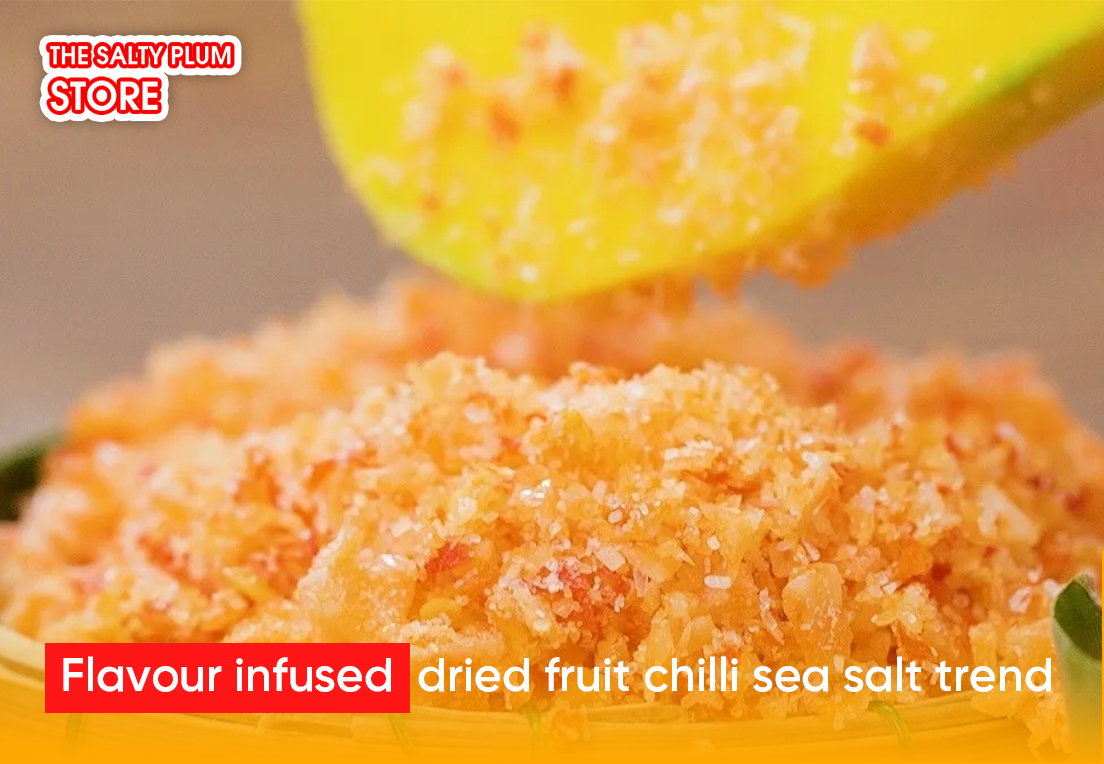 Flavour infused dried fruit chilli sea salt trend
Flavour Infusions: The Art of Addition Without Subtraction
The 2026 trend isn't about masking fruit, it's about complementing it. The best flavour-infused dried fruits use natural additions that enhance the fruit's existing profile:
-
Chilli + Mango: Capsaicin activates heat receptors while the mango's fructose counterbalances the result is a flavour that evolves across 30 seconds of eating
-
Sea Salt + Plum (Salty Plum): Salt suppresses bitterness and amplifies sweetness this is why TSG Gordonvale's signature Salty Plum range has such devoted followers
-
Tamarind + Lime: Layered acidity that mimics complex cocktail profiles
These aren't novelties, they're rooted in centuries of Asian culinary tradition, and TSG Gordonvale sources directly from producers in Taiwan, Hong Kong, and Thailand who have been perfecting these formulas for generations.
Texture Engineering: The Science of the Perfect Bite
Moisture content control is arguably the most underappreciated technical skill in dried fruit production. The difference between chewy, leathery, crispy, or powdery comes down to moisture percentage and the best producers control this to within 1–2%.
-
12–18% moisture: Chewy, soft, ideal for mango, pawpaw, prune
-
5–10% moisture: Firm with slight snap, ideal for ginger, olive
-
<3% moisture: Crisp, dissolves on tongue, ideal for freeze-dried varieties
When you open a bag of TSG Gordonvale's Dried Ginger or Dried Tamarind and notice the texture is exactly what you expected, that's not an accident. That's precision.
Choosing the Best at TSG Gordonvale
Not everything that carries a premium label is genuinely premium. At TSG Gordonvale (Shop 2, 76–86 Gordon Street, Gordonvale QLD 4865), every product on the shelf has gone through a selection process that asks three questions before anything else:
1. Can we verify where this fruit came from? TSG Gordonvale stocks products from verified origins across Australia, Taiwan, Hong Kong, Thailand, Japan, and the Philippines — not generic blends of unnamed "tropical origin."
2. Does the ingredient list pass the additive test? Products with sulphur dioxide as a primary preservative, or added sugar in the top three ingredients, don't make the cut.
3. Does it taste like the real thing? This sounds obvious. It's remarkable how often it eliminates what looks premium on paper.
Our recommended starting point for new customers:
|
If you want… |
Start with… |
Why |
|
Classic sweet-tangy |
Tropical origin, no artificial colour |
|
|
Something unexpected |
Generations-old Taiwanese craft recipe |
|
|
Bold & functional |
Australian-sourced, clean ingredient list |
|
|
Crowd pleaser |
Far North QLD origin, naturally sweet |
|
|
Adventurous pairing |
Complex layered acidity |
We don't just sell snacks, we sell products we've personally vetted for origin, process, and integrity. That's a standard we've held since opening in Gordonvale in 2017, and it doesn't change based on what's cheapest to stock.
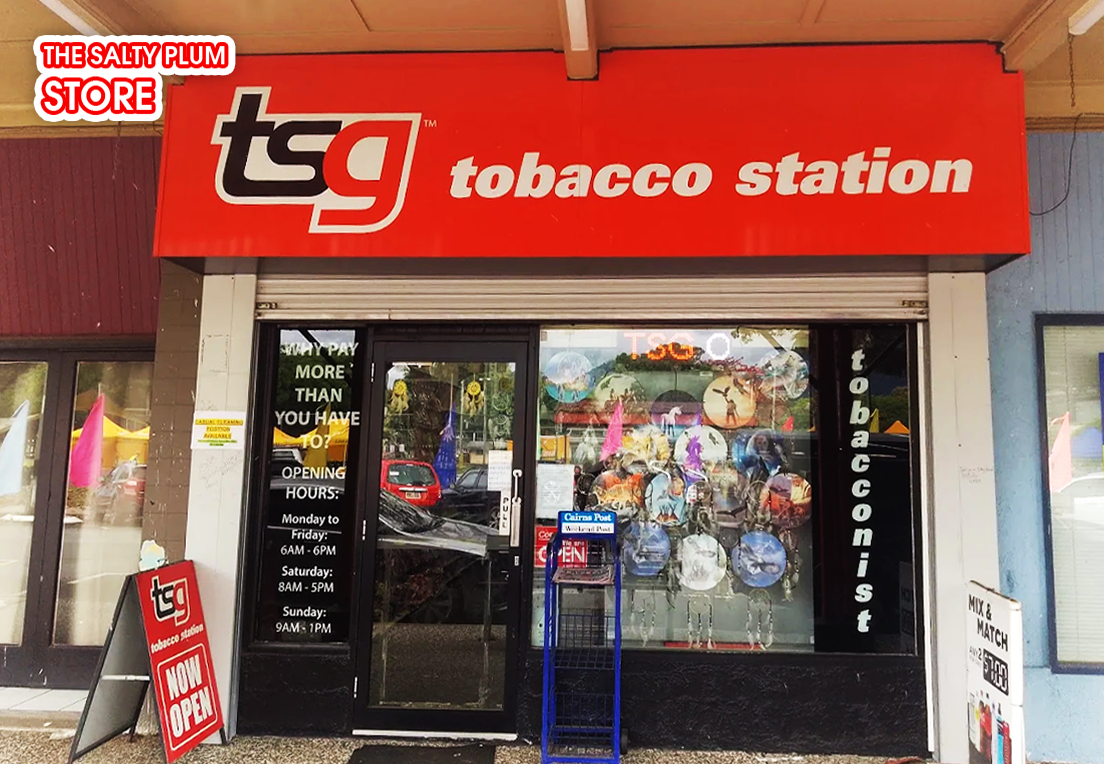 TSG Gordonvale store premium dried fruit selection
Trust Your Palate
The next time you pick up a bag of dried fruit, here's a three-second checklist before it goes in your basket:
1. Check the ingredient list, not the packaging design. If sugar is in the top two ingredients or you see sulphur dioxide, put it down.
2. Look for an origin statement. "Made from tropical fruit" is meaningless. "Tree-ripened mango from Far North Queensland" tells a story.
3. Trust your first bite. Premium dried fruit delivers a flavour arc, sweetness, complexity, a lingering finish. Cheap dried fruit hits one note and stops.
Quality is never accidental. It's a series of deliberate decisions made at every step, from the orchard, through the drying room, to the packaging line. At TSG Gordonvale, we make those decisions so you don't have to guess.
Visit us in-store at Shop 2, 76–86 Gordon Street, Gordonvale QLD 4865, or explore our full range at tsggordonvale.com/products. Call our team on (07) 4056 1561. We're happy to help you find the right product for your taste.
Related Article:
Salty Plum vs Dried Mango: Which One Should You Choose?
The Truth About Dried Fruits: Healthy Snack or Hidden Sugar?
Which Type of Salty Plum to Buy? Beginner Guide